Ironclad Build
🩸 Bloodthirsty Rite of Rupture
Pay in blood, scale without limit
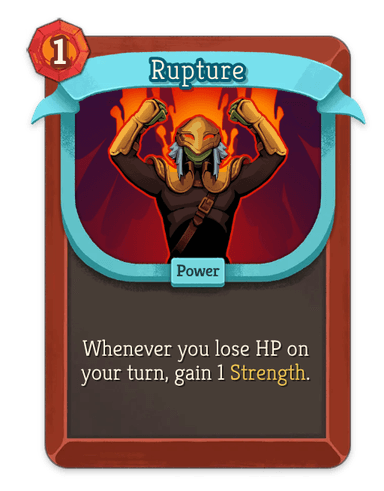
Whenever you lose HP on your turn, gain 1 Strength.
Upgraded: Whenever you lose HP on your turn, gain 2 Strength.
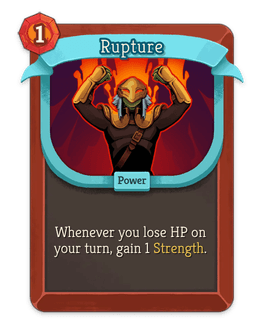
Win condition: Use Rupture so that every point of self-inflicted HP loss becomes permanent Strength, then feed it deliberately with Bloodletting, Hemokinesis, Offering, and Crimson Mantle. Inferno converts the same HP loss into board-wide damage, so your blood scales both offense and tempo.
- B-Tier
- Tier
- Advanced
- Difficulty
- 10
- Core cards
- B-Tier
- Power
Deck core
Core cards
The cards this build is built around — prioritize these on every run.
Must-pick
Whenever you lose HP on your turn, gain 1 Strength.
Upgraded: Whenever you lose HP on your turn, gain 2 Strength.
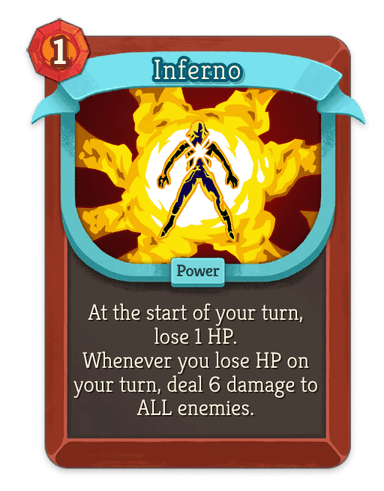
At the start of your turn, lose 1 HP. Whenever you lose HP on your turn, deal 6 damage to ALL enemies.
Upgraded: At the start of your turn, lose 1 HP. Whenever you lose HP on your turn, deal 9 damage to ALL enemies.
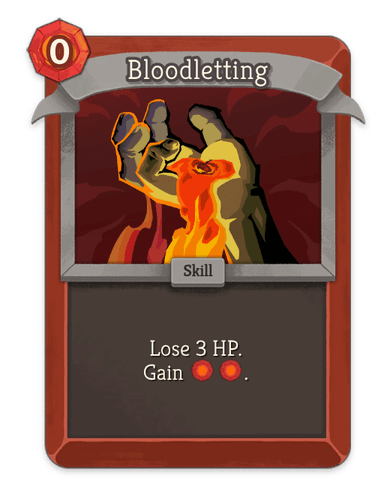
Lose 3 HP. Gain 2 Energy.
Upgraded: Lose 3 HP. Gain 3 Energy.
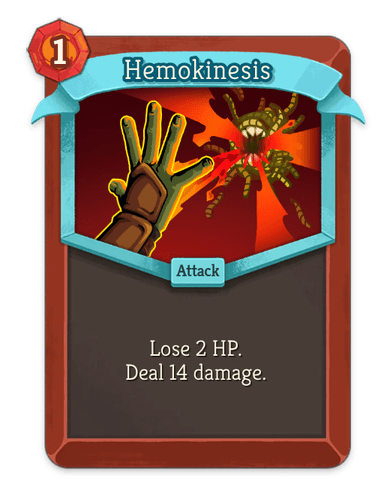
Lose 2 HP. Deal 14 damage.
Upgraded: Lose 2 HP. Deal 19 damage.
Lose 6 HP. Gain 2 Energy. Draw 3 cards. Exhaust.
Upgraded: Lose 6 HP. Gain 2 Energy. Draw 5 cards. Exhaust.

At the start of your turn, lose 1 HP and gain 8 Block.
Upgraded: At the start of your turn, lose 1 HP and gain 10 Block.
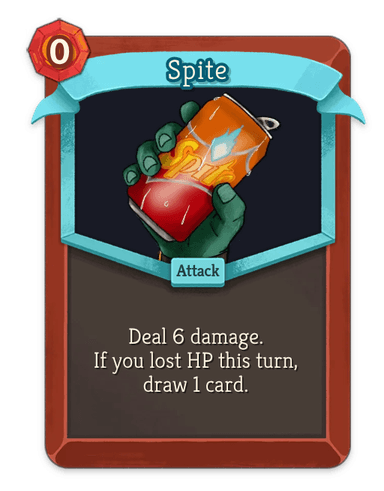
Deal 6 damage. If you lost HP this turn, draw 1 card.
Upgraded: Deal 9 damage. If you lost HP this turn, draw 1 card.
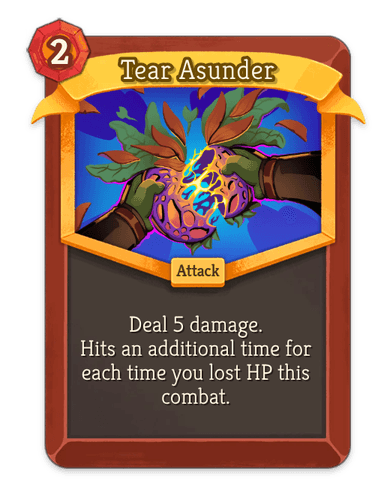
Deal 5 damage. Hits an additional time for each time you lost HP this combat.
Upgraded: Deal 7 damage. Hits an additional time for each time you lost HP this combat.
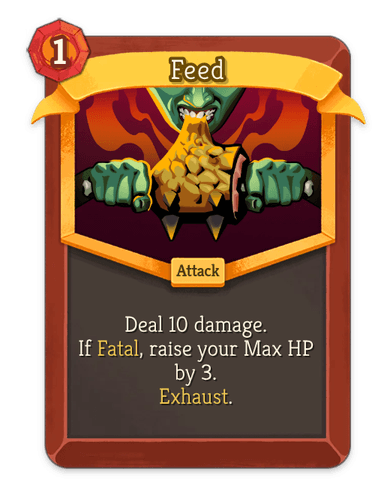
Deal 10 damage. If Fatal, raise your Max HP by 3. Exhaust.
Upgraded: Deal 12 damage. If Fatal, raise your Max HP by 4. Exhaust.
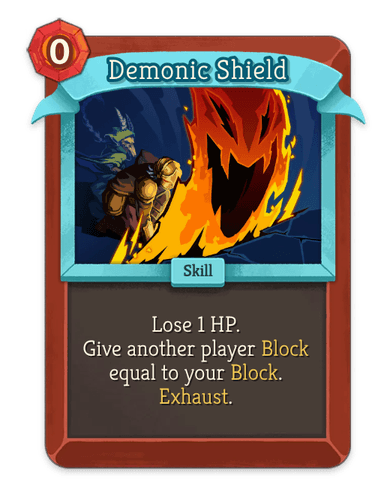
Lose 1 HP. Give another player Block equal to your Block. Exhaust.
Upgraded: Lose 1 HP. Give another player Block equal to your Block.
Flex picks
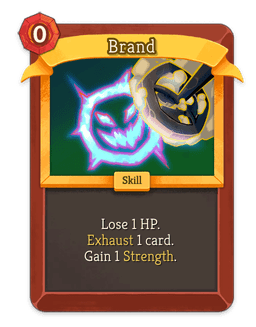
Lose 1 HP. Exhaust 1 card. Gain 1 Strength.
Upgraded: Lose 1 HP. Exhaust 1 card. Gain 2 Strength.
Lose 1 HP. Deal 9 damage to ALL enemies.
Upgraded: Lose 1 HP. Deal 13 damage to ALL enemies.
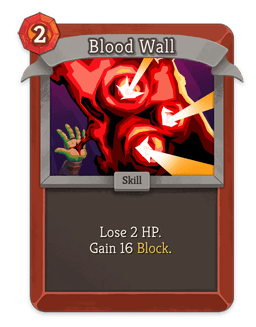
Lose 2 HP. Gain 16 Block.
Upgraded: Lose 2 HP. Gain 20 Block.
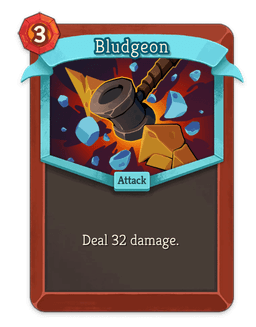
Deal 32 damage.
Upgraded: Deal 42 damage.
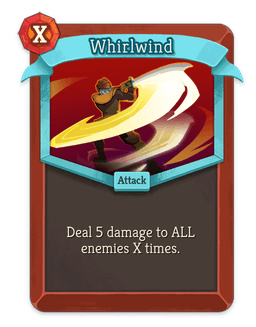
Deal 5 damage to ALL enemies X times.
Upgraded: Deal 8 damage to ALL enemies X times.
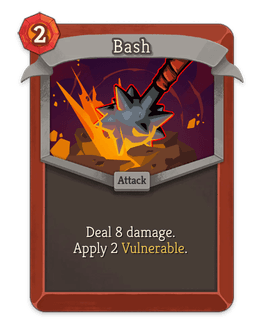
Deal 8 damage. Apply 2 Vulnerable.
Upgraded: Deal 10 damage. Apply 3 Vulnerable.
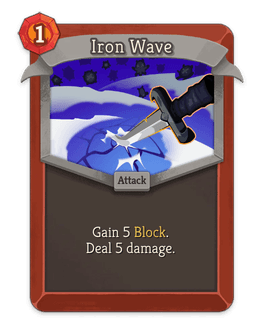
Gain 5 Block. Deal 5 damage.
Upgraded: Gain 7 Block. Deal 7 damage.
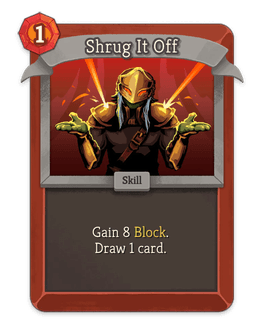
Gain 8 Block. Draw 1 card.
Upgraded: Gain 11 Block. Draw 1 card.
Synergy
Relic priorities
What to grab from shops, bosses and chests to power the engine.
 Demon TongueCore
Heals your first HP loss each turn — refunds the cost of Bloodletting/Crimson Mantle while you keep all the Strength and Inferno triggers.
 Red SkullCore
+3 Strength while at or below 50% HP — and this deck WANTS to be low, so it's effectively a free Strength power.
 Self-Forming ClayStrong
Gain 3 Block next turn whenever you lose HP — converts your self-damage into defense automatically.
 Black BloodStrong
Heal 12 HP at end of combat (upgraded starter) — keeps your blood reserve topped between fights.
 Meat on the BoneStrong
Heal 12 if you end combat at or below half HP — which is your default state, so it's near-guaranteed sustain.
 Tungsten RodSituational
Lose 1 less HP whenever you'd lose HP; softens every self-damage card and enemy hit alike.
 Lizard TailSituational
One-time revive to 50% Max HP — a crucial safety net for a deck that flirts with death.
Game plan
How to play
Step-by-step through the run, from opening hands to the win.
Honest take
Pros & cons
Strengths
- Doubles up offense and tempo — the same HP spend builds Strength AND clears boards.
- Bloodletting and Offering enable some of the most explosive Energy turns in the game.
- Scales indefinitely in long fights via Strength and Tear Asunder.
Weaknesses
- Genuinely risky — mismanaging your HP loses runs outright.
- Demands healing/sustain support; without it the deck kills you faster than the enemy.
- Setup-dependent and clunky before Rupture and sustain are both online.
Opening
Mulligan & priorities
What to keep, what to ditch in your opening hands.
- Keep Rupture — without it your HP loss is just damage to yourself.
- Keep Inferno alongside it; the two powers form the engine.
- Hold Bloodletting as a cheap enabler that's pure upside once Rupture is down.
- Keep a healing or block card if your HP is getting low — sustain is the whole challenge.
- Be cautious keeping Offering early — 6 HP is a real cost before Rupture/Demon Tongue are online.
Map strategy
Pathing
How to route the map to assemble the build and stay healthy.
Routing
Prioritise healing and Max-HP relics/events (Demon Tongue, Red Skull, Feed kills, Meat on the Bone) so your blood reserve stays topped up. Rest Sites are more valuable here than in other Ironclad decks — you spend HP as ammo.
Scaling timeline
Act 1: Rupture + Inferno + Bloodletting. Act 2: add sustain (Demon Tongue / Self-Forming Clay) and a payoff (Tear Asunder, Feed). Act 3: with the engine humming, HP-loss turns become net-positive and Strength snowballs.
Avoid these
Common mistakes
- Spending HP before Rupture is down — you're just hurting yourself for nothing.
- Bleeding faster than you can heal; respect your HP total against burst damage.
- Forgetting Inferno triggers on ANY HP loss on your turn — sequence Bloodletting/Crimson Mantle to maximise its AoE.
- Playing Tear Asunder early; it scales with HP losses this combat, so it's a late-fight payoff, not an opener.
Quick answers
FAQ
Common questions about the Bloodthirsty Rite of Rupture Ironclad build.
Is the self-damage HP-loss build good in Slay the Spire 2?
It's a high-skill B-tier line that scales indefinitely in long fights, since the same HP spend builds Strength via Rupture and clears boards via Inferno. It's genuinely risky, though — mismanaging your HP loses runs outright, and the deck is clunky before Rupture and your sustain are both online.
What are the best cards for a self-damage Ironclad?
Rupture is the engine, turning every point of HP loss into permanent Strength, and Inferno converts that same loss into AoE. Bloodletting and Offering become Energy- and Strength-positive with Rupture down, while Hemokinesis, Tear Asunder, and Feed cash the bleeding into burst, scaling hits, and Max HP.
What relics does the self-damage build want?
Demon Tongue and Red Skull are both core — Demon Tongue heals your first HP loss each turn to refund the cost, and Red Skull grants +3 Strength while at or below 50% HP, which is this deck's default state. Self-Forming Clay, Black Blood, and Meat on the Bone provide the sustain that keeps your blood reserve topped up.
Is the self-damage build good for high Ascension or beginners?
It's Advanced and not recommended for beginners — it demands careful HP tracking and healing support, or it kills you faster than the enemy. At high Ascension it can be powerful in long fights but punishing against burst bosses, so bank a Blood Potion or Fairy in a Bottle. As StS2 is in Early Access, Rupture and HP-loss interactions may change between patches.
Provenance
Sources & video guides
This build's strategy is informed by these community creators.